About
Overview
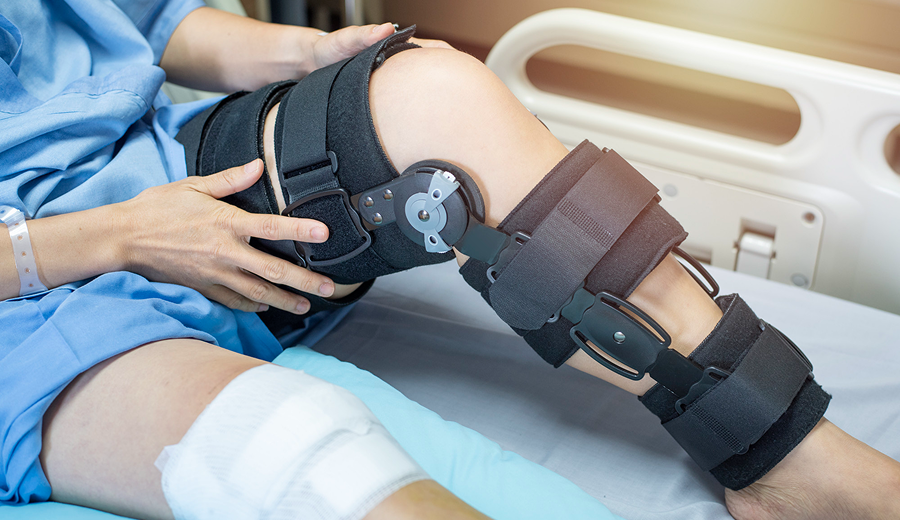

An ACL injury is a tear or sprain of the anterior cruciate (KROO-she-ate) ligament (ACL) — one of the strong bands of tissue that help connect your thigh bone (femur) to your shinbone (tibia). ACL injuries most commonly occur during sports that involve sudden stops or changes in direction, jumping and landing — such as soccer, basketball, football and downhill skiing.
Many people hear a pop or feel a “popping” sensation in the knee when an ACL injury occurs. Your knee may swell, feel unstable and become too painful to bear weight.
Depending on the severity of your ACL injury, treatment may include rest and rehabilitation exercises to help you regain strength and stability, or surgery to replace the torn ligament followed by rehabilitation. A proper training program may help reduce the risk of an ACL injury.
Symptoms
Signs and symptoms of an ACL injury usually include:
- A loud pop or a “popping” sensation in the knee
- Severe pain and inability to continue activity
- Rapid swelling
- Loss of range of motion
- A feeling of instability or “giving way” with weight bearing
Why it happens / Causes
Ligaments are strong bands of tissue that connect one bone to another. The ACL, one of two ligaments that cross in the middle of the knee, connects your thighbone to your shinbone and helps stabilize your knee joint.
ACL injuries often happen during sports and fitness activities that can put stress on the knee:
- Suddenly slowing down and changing direction (cutting)
- Pivoting with your foot firmly planted
- Landing awkwardly from a jump
- Stopping suddenly
- Receiving a direct blow to the knee or having a collision, such as a football tackle
When the ligament is damaged, there is usually a partial or complete tear of the tissue. A mild injury may stretch the ligament but leave it intact.
Risks & complications
There are a number of factors that increase your risk of an ACL injury, including:
- Being female — possibly due to differences in anatomy, muscle strength and hormonal influences
- Participating in certain sports, such as soccer, football, basketball, gymnastics and downhill skiing
- Poor conditioning
- Using faulty movement patterns, such as moving the knees inward during a squat
- Wearing footwear that doesn’t fit properly
- Using poorly maintained sports equipment, such as ski bindings that aren’t adjusted properly
- Playing on artificial turf
Complications
People who experience an ACL injury have a higher risk of developing osteoarthritis in the knee. Arthritis may occur even if you have surgery to reconstruct the ligament.Multiple factors likely influence the risk of arthritis, such as the severity of the original injury, the presence of related injuries in the knee joint or the level of activity after treatment.
Diagnosis
During the physical exam, your doctor will check your knee for swelling and tenderness — comparing your injured knee to your uninjured knee. He or she may also move your knee into a variety of positions to assess range of motion and overall function of the joint.
Often the diagnosis can be made on the basis of the physical exam alone, but you may need tests to rule out other causes and to determine the severity of the injury. These tests may include:
- X-rays. X-rays may be needed to rule out a bone fracture. However, X-rays don’t show soft tissues, such as ligaments and tendons.
- Magnetic resonance imaging (MRI). An MRI uses radio waves and a strong magnetic field to create images of both hard and soft tissues in your body. An MRI can show the extent of an ACL injury and signs of damage to other tissues in the knee, including the cartilage.
- Ultrasound. Using sound waves to visualize internal structures, ultrasound may be used to check for injuries in the ligaments, tendons and muscles of the knee.
Treatment
Prompt first-aid care can reduce pain and swelling immediately after an injury to your knee. Follow the R.I.C.E. model of self-care at home:
- Rest. General rest is necessary for healing and limits weight bearing on your knee.
- Ice. When you’re awake, try to ice your knee at least every two hours for 20 minutes at a time.
- Compression. Wrap an elastic bandage or compression wrap around your knee.
- Elevation. Lie down with your knee propped up on pillows.
Surgery
Your doctor may recommend surgery if:
- You’re an athlete and want to continue in your sport, especially if the sport involves jumping, cutting or pivoting
More than one ligament or the fibrous cartilage in your knee also is injured - The injury is causing your knee to buckle during everyday activities
- During ACL reconstruction, the surgeon removes the damaged ligament and replaces it with a segment of tendon — tissue similar to a ligament that connects muscle to bone. This replacement tissue is called a graft.
Your surgeon will use a piece of tendon from another part of your knee or a tendon from a deceased donor.
After surgery you’ll resume another course of rehabilitative therapy. Successful ACL reconstruction paired with rigorous rehabilitation can usually restore stability and function to your knee.
There’s no set time frame for athletes to return to play. Recent research indicates that up to one-third of athletes sustain another tear in the same or opposite knee within two years. A longer recovery period may reduce the risk of re-injury.
In general, it takes as long as a year or more before athletes can safely return to play. Doctors and physical therapists will perform tests to gauge your knee’s stability, strength, function and readiness to return to sports activities at various intervals during your rehabilitation. It’s important to ensure that strength, stability and movement patterns are optimized before you return to an activity with a risk of ACL injury.
Rehabilitation
Medical treatment for an ACL injury begins with several weeks of rehabilitative therapy. A physical therapist will teach you exercises that you will perform either with continued supervision or at home. You may also wear a brace to stabilize your knee and use crutches for a while to avoid putting weight on your knee.
The goal of rehabilitation is to reduce pain and swelling, restore your knee’s full range of motion, and strengthen muscles. This course of physical therapy may successfully treat an ACL injury for individuals who are relatively inactive, engage in moderate exercise and recreational activities, or play sports that put less stress on the knees.
Doctors & Departments
Departments and Specialties
Astenortho has one of the largest and most experienced practices. Staff skilled in dozens of specialties work together to ensure quality care and successful recovery.
Doctors Who Perform This Procedure

Dr. Puneeth
Specialities: Complex trauma Deformity correction Limb Lengthening Knee preservation
Book now

Dr. Saraswati Viswanathan
MBBS, MS
Specialities: Paediatric orthopaedics. Clubfoot. Limb length discrepancy. Deformities.
Book now

Dr. Darshan Kumar
MBBS, MS Ortho, FNB( Hand & Micro Surgery), PGDHHM, Diploma In Tissue Bank(Nus)
Specialities: Specialities:Robotic Knee Suregery, External fixation, Robotic Knee Suregery External fixation
Book now


Dr. Vasudevan
MBBS, MS, D Orth, DNB, Mch
Specialities: Specialities:Robotic Knee Suregery, External fixation
Book now

Research
KAstenortho doctors have published extensively on improving knee replacement care. Research topics include new implant materials, robot-assisted techniques and improvements in pain management after surgery.
Publications
See a list of publications about knee replacement by Astenortho doctors on PubMed, a service of the National Library of Medicine.
Costs and Insurance
AstenOrtho is empanelled with leading insurance providers both within and outside India. For more details on a specific insurance provider or to understand the insurance process, you can write to us at: hello@astenortho.com
Contents


